
01 / Biomass Power
CO₂ Reduction Through Biomass Power
Securing renewable power while creating environmental value for the region.
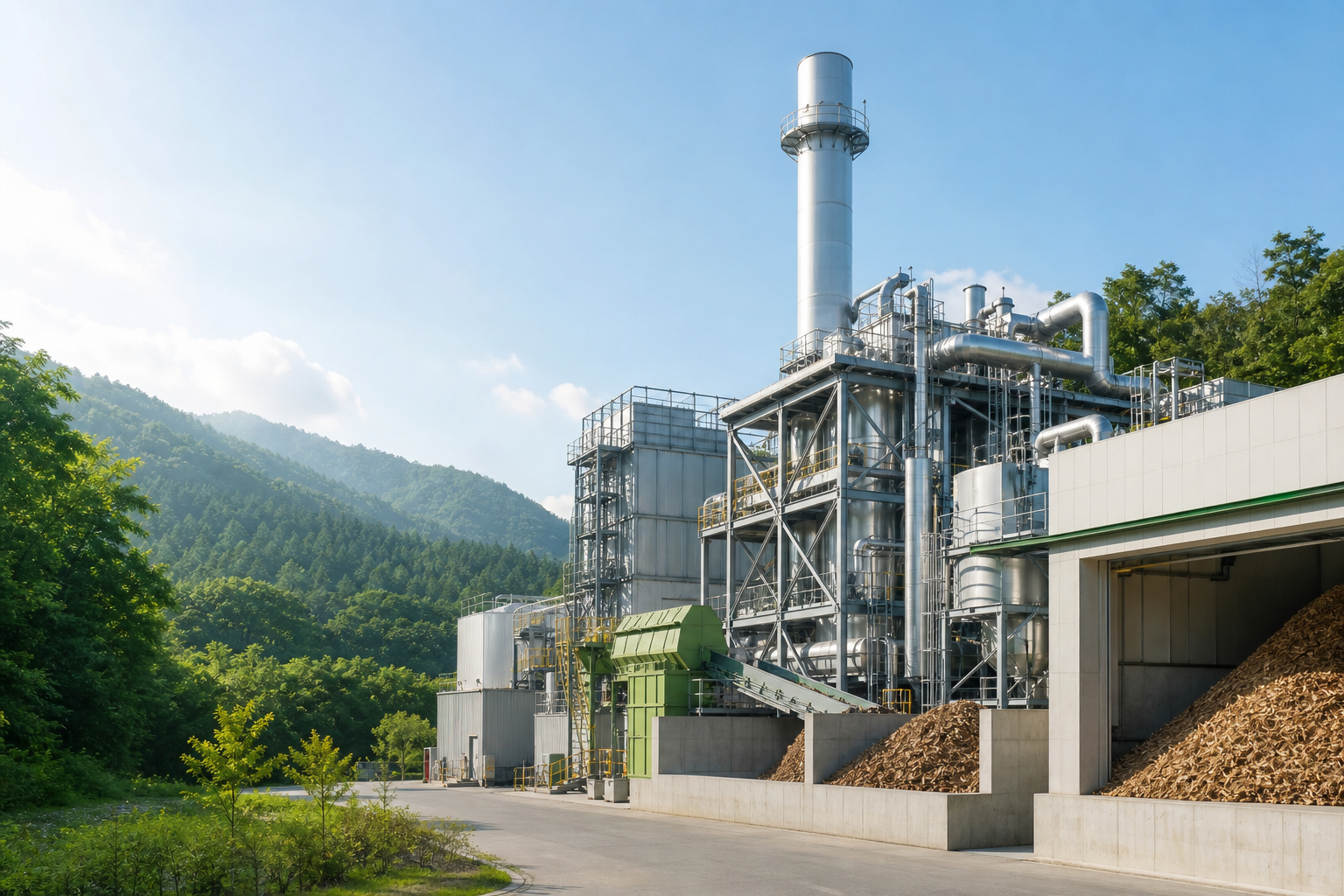
Our hybrid plant operates a 2-megawatt-class biomass power facility. It can cut about 1,296 tonnes of CO₂ per month, or about 15,552 tonnes of CO₂ emissions per year.
This reduction is valued on the international carbon credit market at about US$50 per tonne, or ¥7,500 per tonne. Biomass power alone therefore creates carbon credit value of about ¥116.64 million a year.
By securing sustainable power while contributing greatly to protecting the global environment, this model is a sustainable initiative that local governments and companies can value highly.
02 / Hydrogen Co-benefit
Additional Reduction Through Hydrogen
We also use the hydrogen produced in our magnesium oxide process as environmental value.
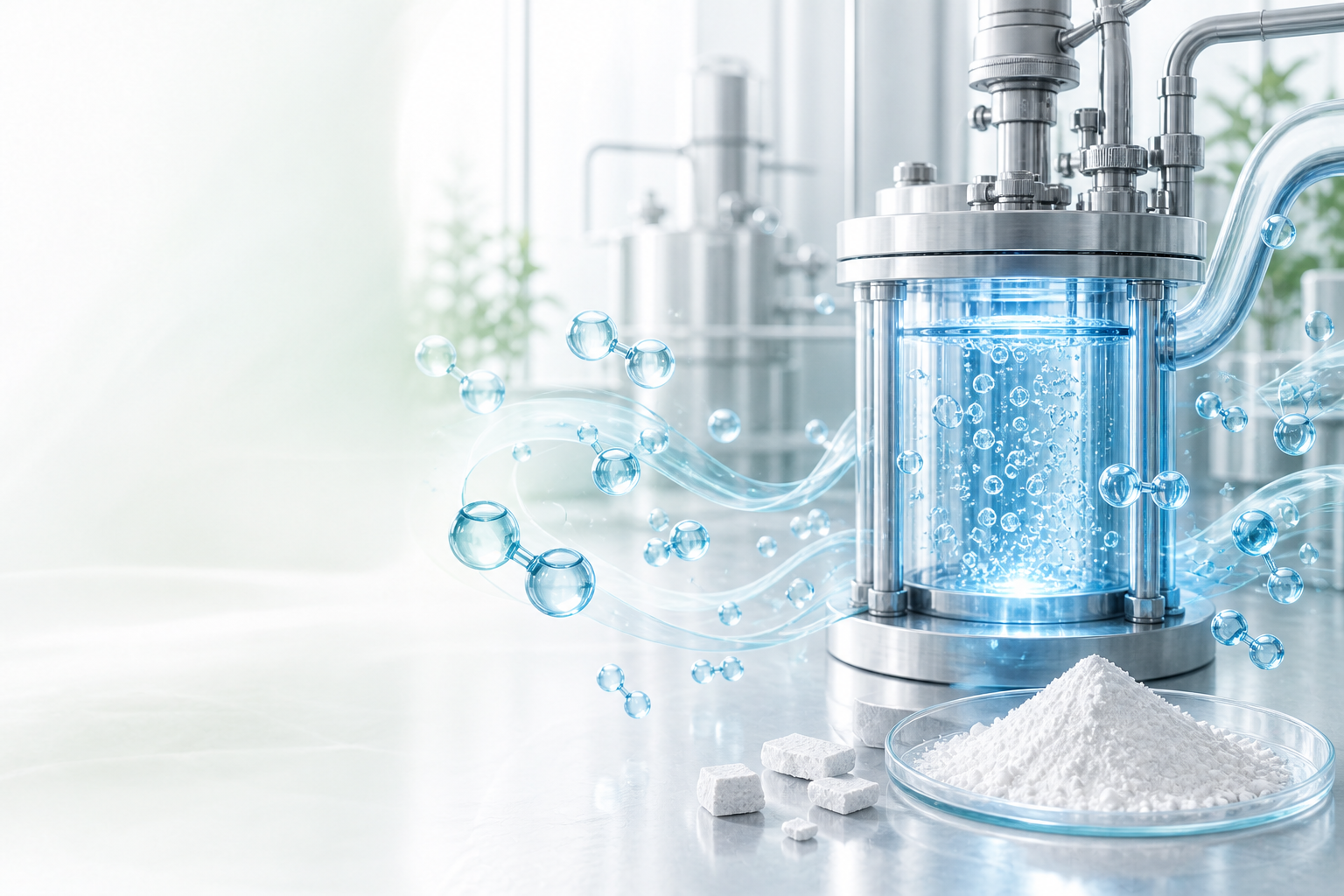
Our proprietary magnesium oxide process produces hydrogen as a by-product. About 2,481 kg of hydrogen is produced each month, equivalent to a reduction of about 81.87 tonnes of CO₂.
In other words, it prevents about 982 tonnes of CO₂ emissions a year. This can also be converted into carbon credits, with expected new revenue of about ¥7.36 million a year (US$50/t × ¥150/US$ × 982 t).
Beyond its environmental contribution, using hydrogen, a clean energy resource drawing growing attention, also creates synergies with the energy industry.
03 / Closed-loop Process
Pollution-Free, Zero-Waste Production
A closed production loop creates materials while keeping environmental impact low.
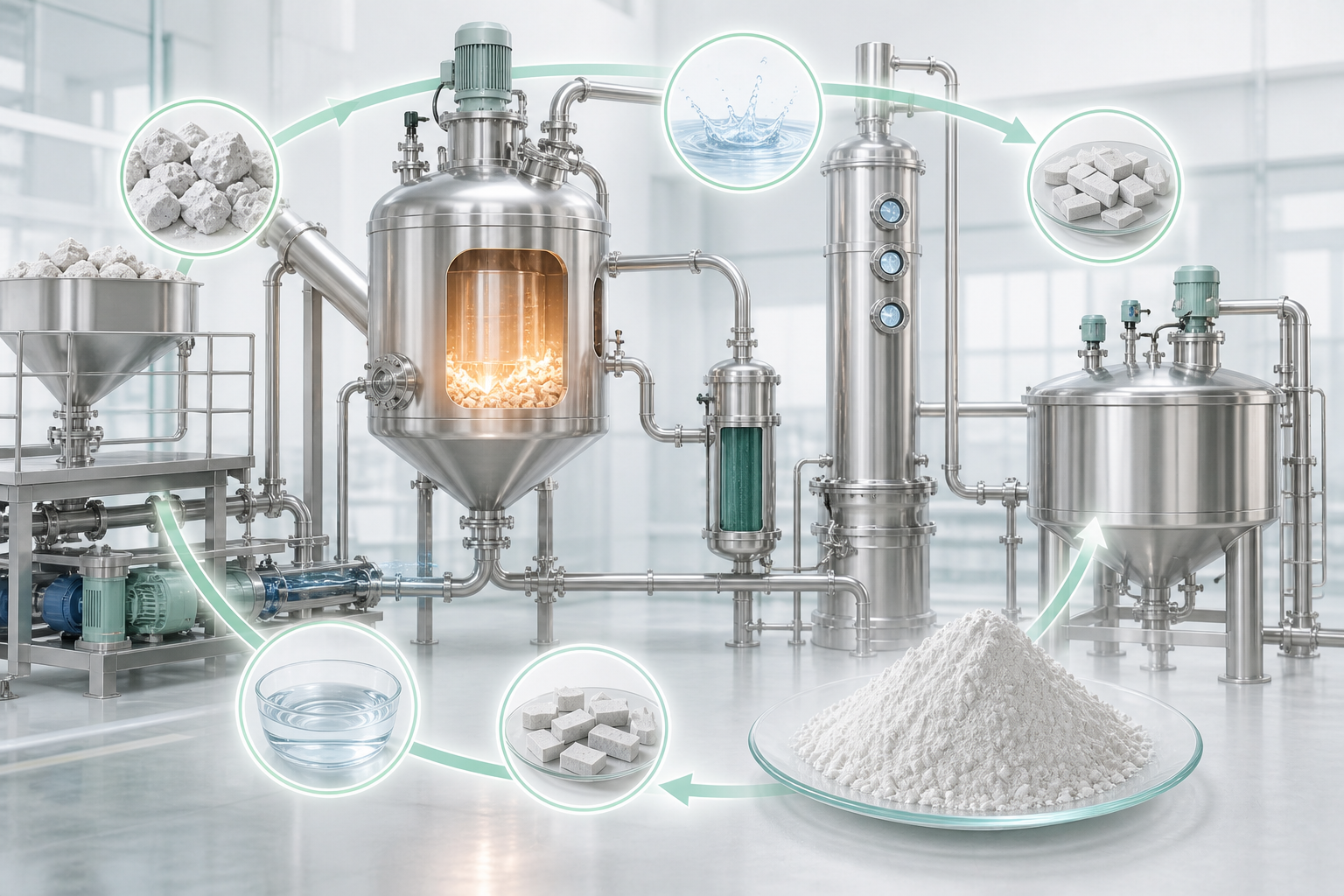
Conventional magnesium oxide production generates harmful by-products and waste, and its environmental impact has been a problem. In our process, magnesium hydride reacts with steam and everything is ultimately converted into magnesium oxide (MgO), so no waste is produced at all.
As environmental regulations tighten, closed-loop production with zero risk of pollution has high social value as a sustainable option.
This technology is also attracting attention as a criterion for ESG investment, improving corporate credibility and opening up new funding opportunities.
04 / Hybrid Revenue Model
A Multi-Stream Revenue Model
Linking power, materials and environmental value in one plant to grow multiple revenue streams.
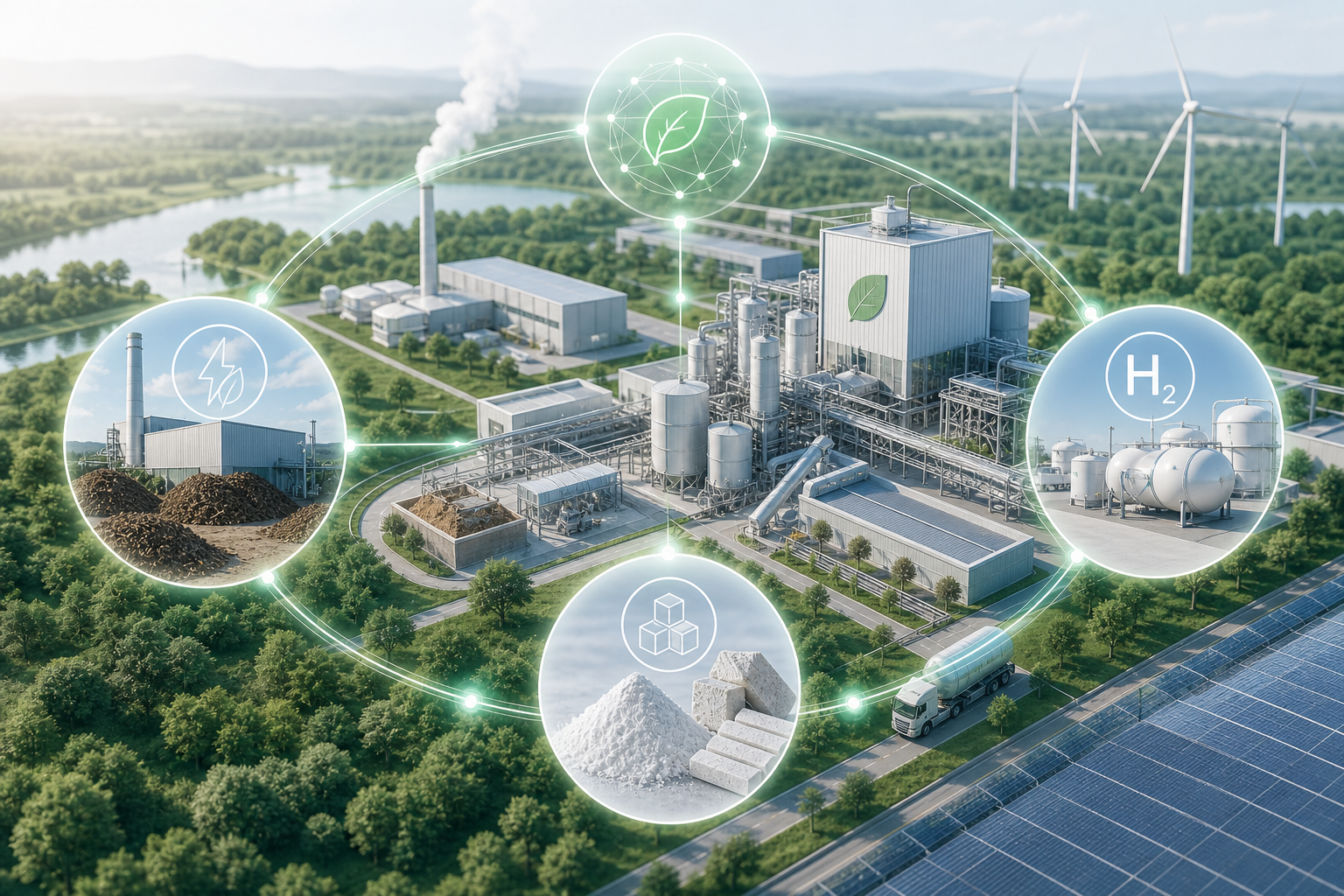
Our hybrid plant is an innovative model with three simultaneous axes: biomass power generation, magnesium oxide production and hydrogen as a by-product.
This combined structure secures diverse revenue streams: electricity sales in energy, supply of high-purity magnesium oxide in materials, and carbon credit sales in the environmental field.
A monthly CO₂ reduction of about 1,378 tonnes generates over ¥10.33 million in credit revenue, with sustained annual revenue expected to exceed ¥124 million. This is hybrid management that balances environment and profit, going far beyond a simple production plant.
05 / Environmental Value
Over ¥124 Million in Credits a Year
Turning environmental contribution into a lasting asset that drives regional business growth.

Based on a monthly CO₂ reduction of 1,378 tonnes, total carbon credits come to about ¥10.33 million per month and over ¥124 million per year.
These credits can be used on environmental trading markets in Japan and abroad; selling them produces real profit, and they can also be used in greenhouse-gas reduction reporting as a pillar of our own environmental strategy.
In the future they can also be used to develop carbon offset products and joint projects with local governments, making them an extremely important asset for our growth. The significance of this model, in which environmental contribution translates directly into revenue, will only continue to grow.
Inquiry
About Our Carbon Credit Business
We welcome inquiries about using environmental value and about our hybrid plants.
Go to Contact Page